
What is GEO (Generative Engine Optimization)? Complete Guide
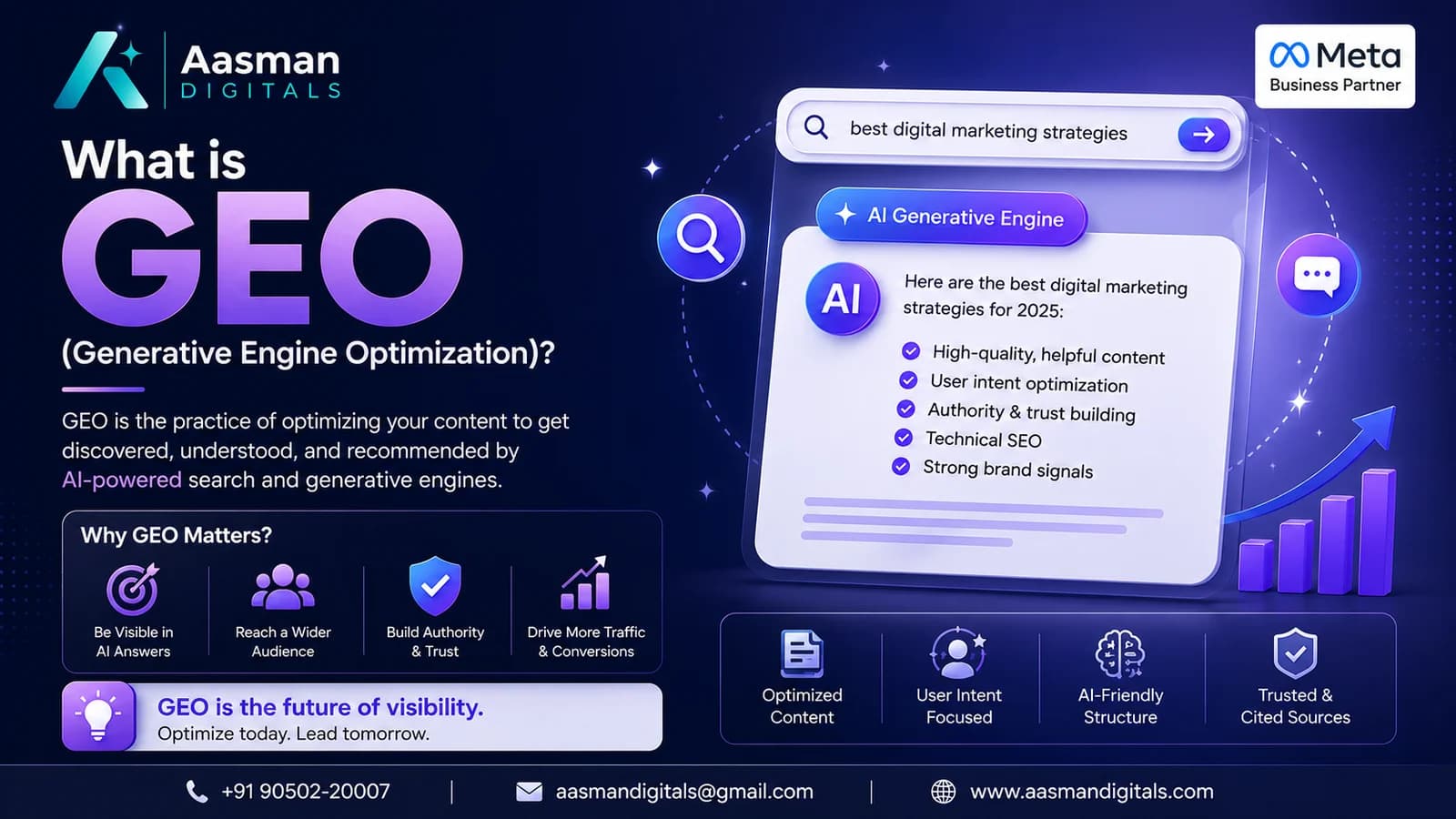
Search is no longer limited to typing a few words into Google and choosing a link from the results. People now ask detailed questions through AI-powered search tools and expect a direct answer.
This change has introduced a new area of search marketing: Generative Engine Optimization (GEO).
If you are asking what is GEO generative engine optimization, the simple answer is this: GEO is the process of creating and improving online content so AI-powered search systems can understand the information and use it when generating answers.
GEO works alongside SEO. It does not mean replacing keywords, technical SEO, or other established search practices. Instead, it adds another consideration: how clearly can search systems understand your content and the subject it covers?
What Is GEO (Generative Engine Optimization)?
Generative Engine Optimization (GEO) refers to the practice of improving content so it has a better chance of being understood, referenced, or cited in AI-generated search responses.
Traditional SEO focuses heavily on helping webpages appear in search results. GEO considers what happens when a user asks an AI-powered search system a question and receives a generated response instead of a traditional list of links.
For example, someone searching for:
"How can a small business reduce its Google Ads costs?"
may receive an AI-generated explanation that brings together information from different sources.
If your website contains a clear and useful explanation of Google Ads costs, the factors that affect them, and practical ways to reduce wasted spending, that content can provide useful information for systems generating such responses.
GEO is therefore less about inserting a specific phrase into a webpage and more about making information clear, relevant, useful, and well-supported.
GEO vs SEO: What Is the Difference?
SEO and GEO overlap, but they are not exactly the same.
SEO helps search engines crawl, understand, and rank webpages. It includes areas such as keyword research, technical optimization, internal linking, content quality, and backlinks.
GEO focuses on how information may be used within AI-generated responses.
The difference becomes easier to understand with an example.
Suppose a company publishes an article titled "Google Ads Budget for Small Businesses."
An SEO strategy may focus on ranking the article for searches related to Google Ads budgets.
A GEO-focused strategy would also make sure the article gives direct answers, explains important terms, provides useful examples, covers related questions, and clearly establishes the context of the information.
The two approaches can support each other. Good technical SEO helps search engines access the content, while well-organized and useful information gives search systems more substance to work with.
Why Does GEO Matter?
The way people search is changing.
Users can now ask longer and more specific questions instead of breaking their research into several separate searches. They may also ask follow-up questions based on the previous answer.
For businesses, this creates another way for potential customers to find information about their services.
Consider someone researching digital marketing agencies. Instead of searching only for "digital marketing agency," they might ask an AI search tool:
"What should I check before hiring a digital marketing agency for a B2B company?"
A useful answer may discuss experience, reporting, pricing, campaign management, industry knowledge, and previous results.
A business that publishes detailed information around these subjects has more relevant material for search systems to understand.
This is one reason AI search optimization is becoming part of broader search strategies.
How Does Generative Engine Optimization Work?
There is no single GEO technique that guarantees inclusion in an AI-generated answer. Different search systems use different methods to find and process information.
Still, several content practices make a website easier to understand.
Answer the Question Early
Do not make readers go through five paragraphs before finding the answer.
If the heading asks, "What is GEO?", provide a short definition at the beginning of the section. You can then explain the topic in more detail.
This structure works well for readers and gives search systems a clear understanding of the section.
Cover the Topic Properly
A short article that repeats the same keyword several times does not provide much value.
A stronger page answers the main question and covers the questions that naturally follow it.
For a GEO guide, those questions could include:
What does GEO mean?
How is GEO different from SEO?
Why does AI search matter?
How should content be optimized?
Does technical SEO still matter?
How can businesses measure GEO performance?
This gives the reader a complete resource instead of forcing them to search for every related question separately.
Keep the Structure Simple
Good formatting matters.
Use descriptive headings, short paragraphs, tables where they make sense, lists for multiple points, and clear definitions.
For example, if a section discusses GEO vs SEO, a comparison table can make the difference much easier to understand than several long paragraphs.
Structured content also helps readers find the exact information they need without scanning an entire page.
Support Important Claims
Do not make strong claims without evidence.
If an article includes statistics, research findings, industry data, or technical statements, use reliable sources where appropriate.
First-hand experience can also make content more useful. Case studies, campaign examples, original research, and specific observations give readers something beyond general information that can be found on hundreds of other websites.
Make Your Business Information Clear
AI search systems need context.
Your website should clearly explain what your company does, which services it provides, who it serves, and what areas it specializes in.
Keep important business information consistent across your website and other relevant online profiles.
For an agency, for example, the website should clearly distinguish between services such as SEO, Google Ads, Meta Ads, web development, and AI automation rather than using broad descriptions that leave the reader guessing.
Update Old Content
Old information can hurt the usefulness of a page.
Review important articles regularly and update outdated statistics, examples, screenshots, service details, and references.
This is especially important for topics related to technology and search marketing because tools, features, and best practices can change quickly.
GEO SEO 2026: What Should Businesses Do?
The discussion around geo seo 2026 should not be treated as a reason to stop doing traditional SEO.
Businesses still need technically sound websites, useful content, good page structure, internal links, crawlable pages, and strong topical relevance.
The difference is that content planning now needs to account for more than traditional keyword rankings.
Start by identifying the questions customers ask before making a purchase. Then create pages that answer those questions clearly.
For example, a digital marketing agency could create content around:
Google Ads costs
SEO pricing
PPC landing pages
Meta Ads strategies
Local SEO
Conversion tracking
Performance Max campaigns
SEO for small businesses
Each page should have a clear purpose. Avoid creating several pages that say almost the same thing just to target slightly different keywords.
Common GEO Mistakes
One of the biggest mistakes is treating GEO as keyword stuffing with a new name.
Repeating phrases such as "GEO," "AI search optimization," or "generative engine optimization" throughout an article does not automatically make the content useful.
Another mistake is writing content only for search systems.
People are still the readers. If an article is difficult to read, filled with unnecessary jargon, or does not answer the question properly, optimization has missed its main purpose.
Businesses should also be careful with claims about guaranteed AI rankings or citations. No legitimate GEO strategy can guarantee that a particular webpage will appear in every AI-generated response.
Does GEO Replace SEO?
No. SEO remains an important part of website visibility. Search engines still need to crawl and index webpages, understand their content, and determine how relevant they are to users.
GEO adds another layer to the strategy.
A useful way to approach it is:
SEO helps search engines find and understand your website. GEO focuses on making the information useful and clear enough to be considered in AI-generated answers.
Both can be handled as part of the same content and search strategy.
Build Your Visibility for AI Search
So, what is GEO generative engine optimization? It is the process of creating and organizing website information so AI-powered search systems can understand it and potentially use or reference it when generating answers.
For businesses working on ai search optimization, the goal should not be to write for machines. It should be to produce information that people find genuinely useful and that search systems can understand without confusion.
Ready to Prepare Your Website for AI Search?
Don't wait for search behavior to change before updating your strategy. Aasman Digitals can help you strengthen your SEO, content, and digital presence with a strategy built around how people search today.
Talk to Aasman Digitals today and start building a search strategy that works for both traditional and AI-powered search.