
What is Performance Max? Complete Guide (2026)
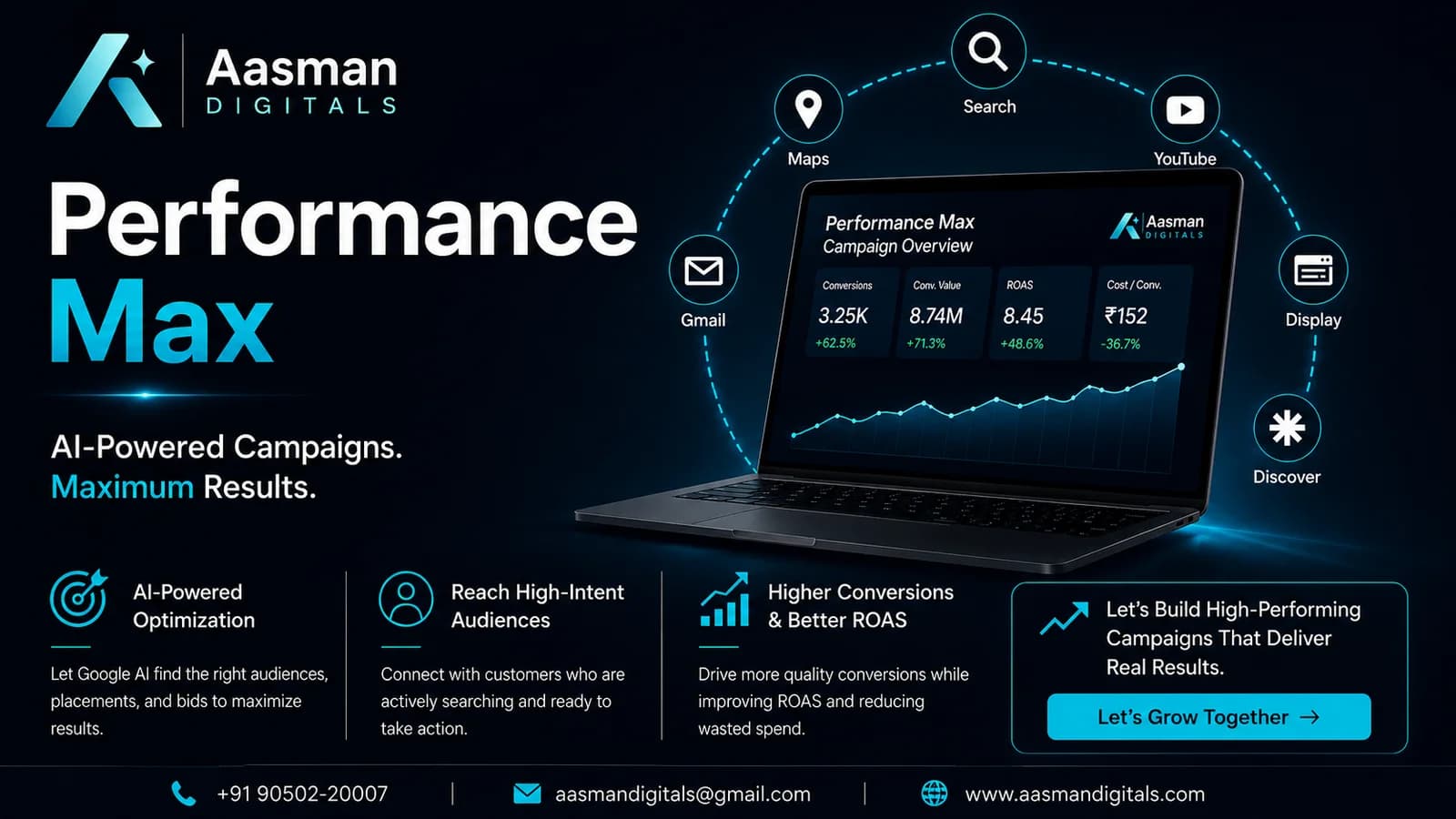
If you've been running Google Ads, you likely have heard of Performance Max. So, what is Performance Max, and why is it so significant to businesses who want leads, sales, and measurable returns?
Also known as PMax, Performance Max is a goal-driven Google Ads campaign that leverages AI and automation to connect with potential customers across multiple Google channels for a single campaign. Rather than create campaigns for each placement, advertisers enter business goals, creative assets, audience data, and conversion info into Google. Using these inputs, Google then uses these inputs to determine where, when, and how ads should be shown.
Performance Max is becoming more about reporting/details, creative controls, audience inputs, and cross-channel optimization, in addition to automation, in 2026.
What is Performance Max?
Performance Max is a Google Ads campaign type that enables advertisers to achieve their desired conversion action across Google's ad network.
All ads can be shown across Google Search, YouTube, Display, Discover, Gmail, Maps, and Search partners in a single Performance Max campaign. Based on how likely the advertiser's chosen goal is to be reached, the campaign can automatically alter bids, placements, and combinations of creatives.
For instance, an ecommerce company can use Performance Max to boost online conversions, and a service-based company can get qualified leads.
Unlike traditional methods where you have to manually determine who will view a specific ad on a specific channel, Google AI analyzes the opportunities available in real time and will distribute your campaign budget where it believes it will be most beneficial.
How Does Performance Max Work?
The basic idea behind PMax Google Ads is straightforward: advertisers provide the inputs, while Google's systems handle much of the optimization.
A typical campaign includes:
A defined conversion goal
Daily advertising budget
Bidding strategy
Headlines and descriptions
Images and logos
Video assets
Audience signals
Landing pages
Product or business data, where applicable
Google combines these inputs with its understanding of search intent, user behavior, auction conditions, and historical campaign data.
Smart Bidding then evaluates individual ad auctions and adjusts bids based on the probability of achieving the campaign's desired outcome. Google states that Performance Max uses AI across bidding, budget optimization, audiences, creatives, and attribution.
This means that your campaign does not show the same ad to everybody. The system continually reviews different opportunities and tries to allocate the budget to those opportunities that will generate the highest return.
Where Can Performance Max Ads Appear?
The cross-channel reach is one of the significant benefits of Performance Max.
Advertisements may be seen on:
Google Search
YouTube
Google Display Network
Discover
Gmail
Google Maps
Search partners
Google's current PMax channel reporting lets advertisers see these placements separately, enabling better visibility into ads' placements.
This broader reach is especially helpful when consumers engage with a company at various points of the sales funnel.
Someone might search for a service on Google today, watch a related YouTube video tomorrow, and later return through another Google property before converting. A PMax Google Ads campaign can participate across these different touchpoints.
Key Components of a Performance Max Campaign
With an understanding of the key elements, it will be easier to create an effective campaign.
1. Conversion Goals
Performance Max is built around business outcomes rather than simply generating impressions. Depending on the business, it could be purchases, qualified leads, phone calls, form submissions, etc.
Accurate conversions tracking is thus a must. If Google receives less accurate or incomplete conversion information, the automation has less reliable or incomplete data to use for campaign optimization.
2. Asset Groups
An asset group is a collection of creative elements that Google can use to create various ads.
These might be headlines, descriptions, images, logos and videos. Google automatically assembles appropriate combinations depending on where the ad appears.
For example, a company selling multiple product categories can organize asset groups around individual product themes rather than placing unrelated messaging into one group.
3. Audience Signals
Audience signals provide Google with more data that can help to understand the types of people most relevant to your business.
These can be customer information, interests, demographics, customized segments, and more. They are not traditional audience targeting restrictions. Rather, they offer suggestions that will assist Google's AI to determine where to start to search for worthy users.
Google can reach beyond those signals when its systems determine that they have a strong likelihood of converting.
4. Bidding Strategy
Bidding is used to identify the objective of the campaign and the amount of money that is available. Common Smart Bidding options include:
Maximize Conversions
Target CPA
Maximize Conversion Value
Target ROAS
Starting in June 2026, Google changed the names of certain Smart Bidding strategies, without altering the actual bidding behavior.
The right strategy will depend on your lead goal, whether it's lead volume, purchase volume, conversion value, or return on advertising spend.
Performance Max vs. Search Campaigns
Performance Max does not simply replace traditional Search campaigns.
Search campaigns offer a greater level of control over keyword targeting, ad messaging, search terms, and specific query-focused strategies. Performance Max takes a broader approach by allowing Google's automation to find conversion opportunities across multiple channels.
Google defines Performance Max as complementary to keyword-based Search campaigns.
Combining both can offer a better advertising structure for many businesses. Search can offer targeted coverage for specific searches, and Performance Max can expand reach across Google's wider inventory.
The right combination depends on conversion data, budget, industry, objectives, and control needed.
What are the advantages of Performance Max?
A properly set up Performance Max campaign offers several benefits.
Wider Google Reach
The advertiser can access multiple channels with one campaign instead of creating a separate campaign for each channel.
Automated Optimization
Google AI continually evaluates bids, audiences, placements, and creative combinations based on the campaign's objective.
Efficient Budget Allocation
Performance Max can shift spending across available inventory based on predicted conversion opportunities rather than keeping the same allocation across every channel.
More Creative Flexibility
The more combinations Google's systems are able to test across different placements, the more headlines, descriptions, images, videos, etc., that are available to try.
Additional Performance Insights
Now, Performance Max offers insights and channel-level reporting to understand how campaigns are performing across Google's inventory.
How to Build an Effective Performance Max Strategy
Automation does not mean a campaign can simply be launched and ignored.
A strong Performance Max strategy starts with reliable tracking. Make sure important conversions are correctly configured and that the campaign is optimizing toward outcomes that actually matter to the business.
Next, create high-quality asset groups with messaging that matches individual products, services, or customer needs. Avoid mixing completely unrelated offers into the same creative theme.
Audience signals can also provide useful starting information, particularly when you have strong first-party customer data.
Your landing pages deserve equal attention. Even a well-optimized ad cannot compensate for a slow, confusing, or poorly matched landing page.
Finally, give the campaign enough time and meaningful data before making frequent changes. Constantly changing budgets, goals, assets, or targeting can make it harder to evaluate what is actually working.
Common Performance Max Mistakes to Avoid
Several mistakes can reduce campaign effectiveness.
Poor conversion tracking: Optimizing for low-value actions can teach the system to prioritize the wrong users.
Weak creative assets: Automation still needs strong material to work with. Generic headlines and low-quality images limit creative performance.
Too many unrelated products or services: A campaign with disconnected themes can make messaging less relevant.
Ignoring landing pages: Ad performance and landing-page experience work together.
Making changes too frequently: Campaigns need sufficient data to evaluate performance before major decisions are made.
Focusing only on clicks: A campaign generating traffic is not necessarily generating business results. Leads, sales, revenue, and qualified actions are often more meaningful measures.
Is Performance Max Right for Your Business?
Performance Max can be a strong choice for businesses with clear conversion objectives and enough data to support automated optimization.
Google recommends Performance Max for advertisers focused on goals such as online sales and lead generation, especially when they want access to Google's broader inventory without restricting ads to particular channels.
However, PMax should not be treated as a universal replacement for every Google Ads campaign.
Businesses that require highly specific keyword control, tightly segmented search strategies, or detailed placement restrictions may still benefit from traditional campaign types alongside Performance Max.
The best setup depends on your goals and how much control versus automation your advertising strategy requires.
Make Performance Max Work for Your Business
Performance Max combines Google's advertising channels with automated bidding, audience optimization, and creative delivery. Its effectiveness depends on the quality of the data, assets, conversion goals, and landing pages behind the campaign.
For businesses, the focus should be on giving Google clear signals while maintaining a strong overall advertising strategy. Accurate tracking, relevant messaging, and meaningful conversion goals help the campaign optimize toward results that matter.
If you need help setting up, auditing, or improving a PMax Google Ads campaign, Aasman Digitals can create and manage a strategy focused on measurable business growth.